AI-Augmented Tools
Design Systems Leadership
Enterprise UX
Customer Service Ops
Vision & Strategy
Global Team Leadership
Multi-Year Roadmap
Context & Overview
Project Summary
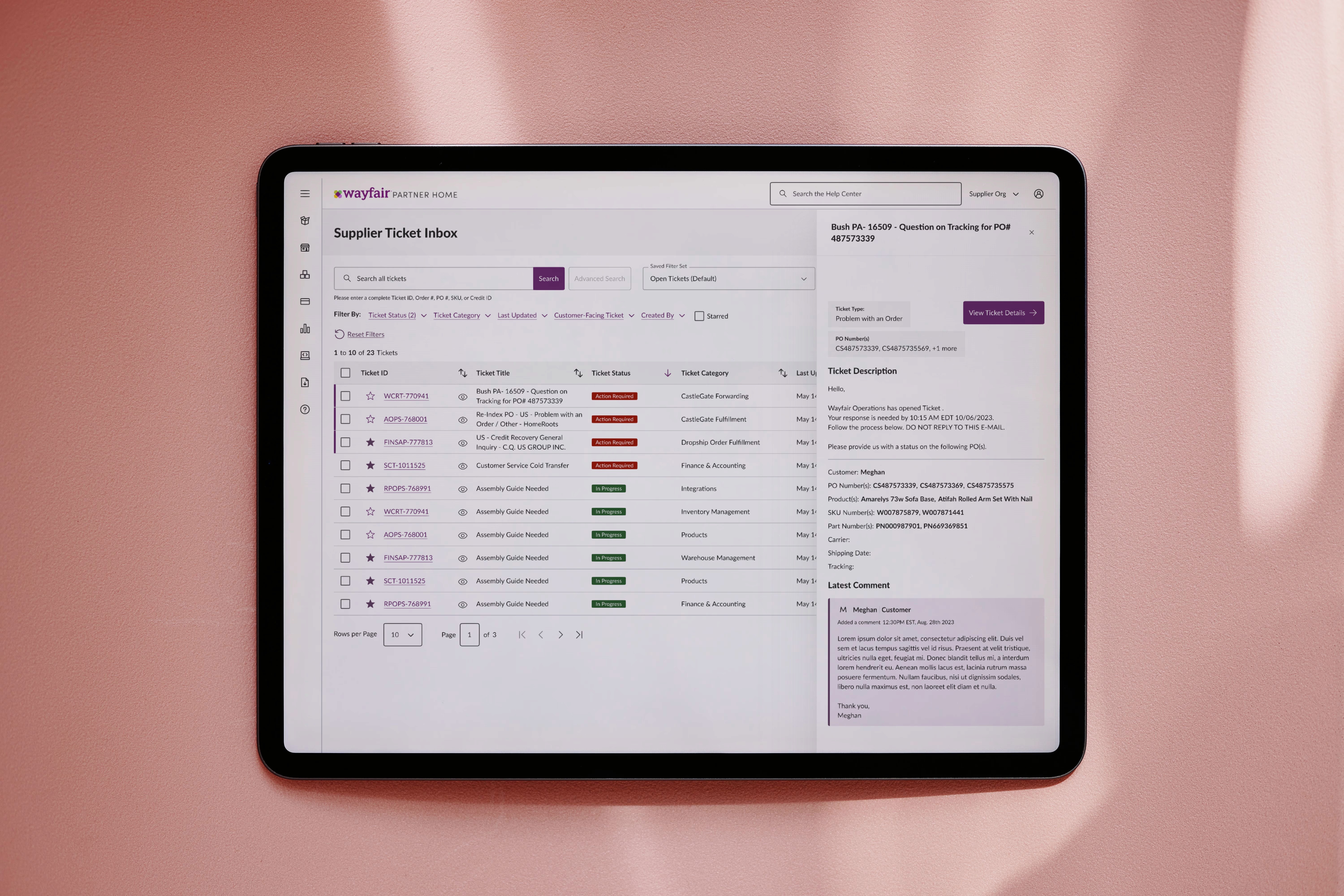
Wayfair’s Customer Service (CS) organization needed a long-term strategy to transform the post order customer service agent experience. Rising labor costs, shifting demographics (Millennials & Gen Z), and increasing business complexity (B2B, omni-channel, retail presence) demanded a more scalable, automated, and intuitive support environment.
My Role
As the head of Customer Service Experience Design at Wayfair, I led the design strategy in partnership with Product, Engineering, Operations, and Machine Learning teams. My scope spanned vision-setting, design systems leadership, and enabling a team of designers based across North America, United Kingdom and Germany to deliver on high-scale agent-facing initiatives for our global customer service call centers.
Timeline & Scale
This was a multi-year, multi-quarter roadmap with direct implications for 5,000+ global agents, millions of annual contacts, and significant savings in labor efficiency.
Challenge & Problem Statement
Business Need
Agent labor is one of Wayfair’s largest costs, and inefficiencies in training, tooling, and resolution speed created high operating expenses.
Customer Need
Even in an automation-first world, customers wanted fast, accurate, and empathetic human support.
North Star Metrics
CPH (Contacts per Hour): Increase from 4.5 → 9+, effectively doubling efficiency.
Speed to Competency: Reduce onboarding from days to hours.
Digital Containment: Drive 60%+ of contacts through digital/AI-powered tools.
Tool Reliability: Achieve 99.9% stability with simple, intuitive UI.
Constraints
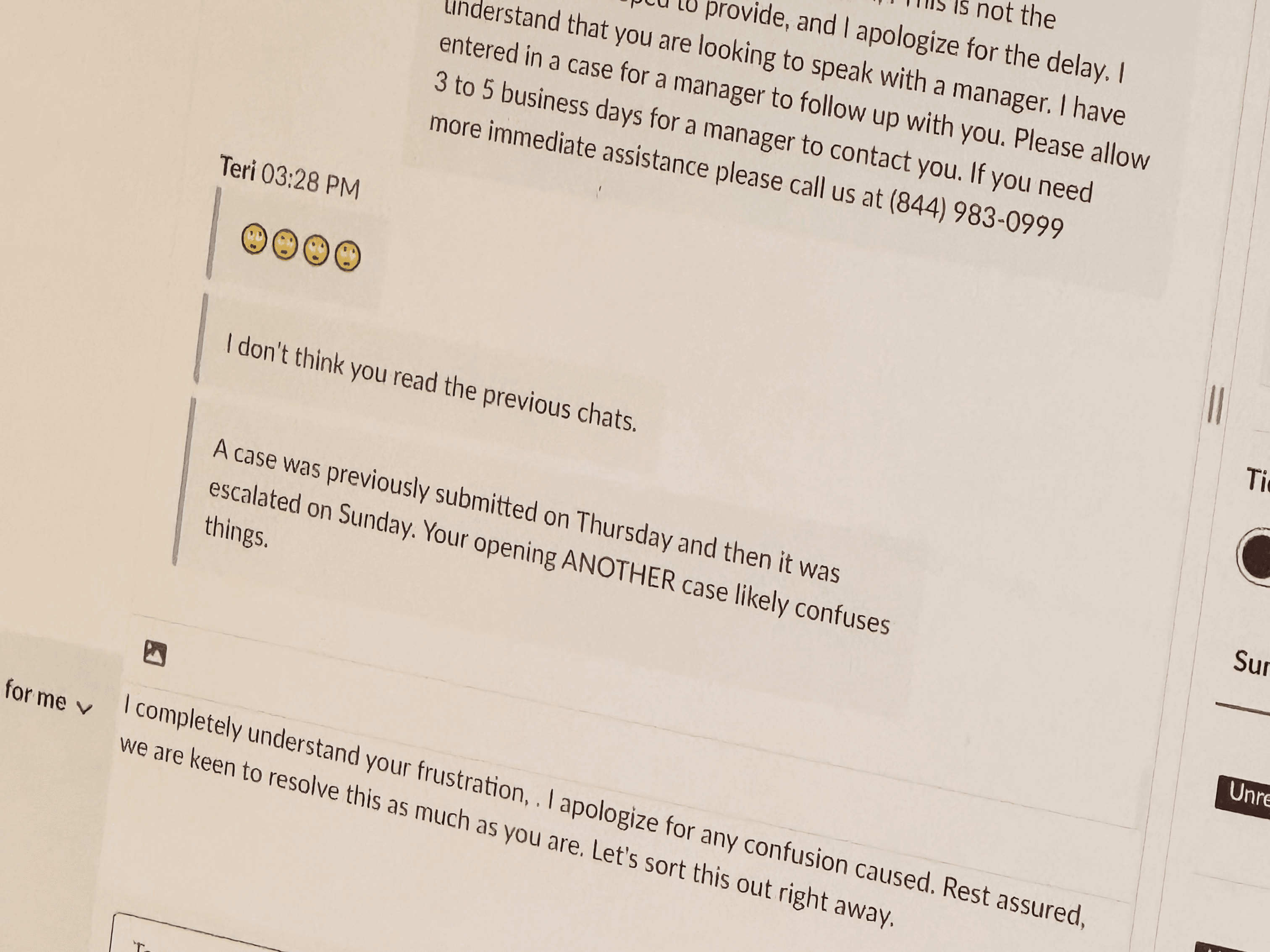
Legacy tools were fragmented, agents faced high cognitive load, and there was skepticism around over-automation replacing human touch.
"
The challenge wasn’t replacing humans with automation, it was designing tools that made humans faster, smarter, and more confident in every interaction.
Discovery & Research
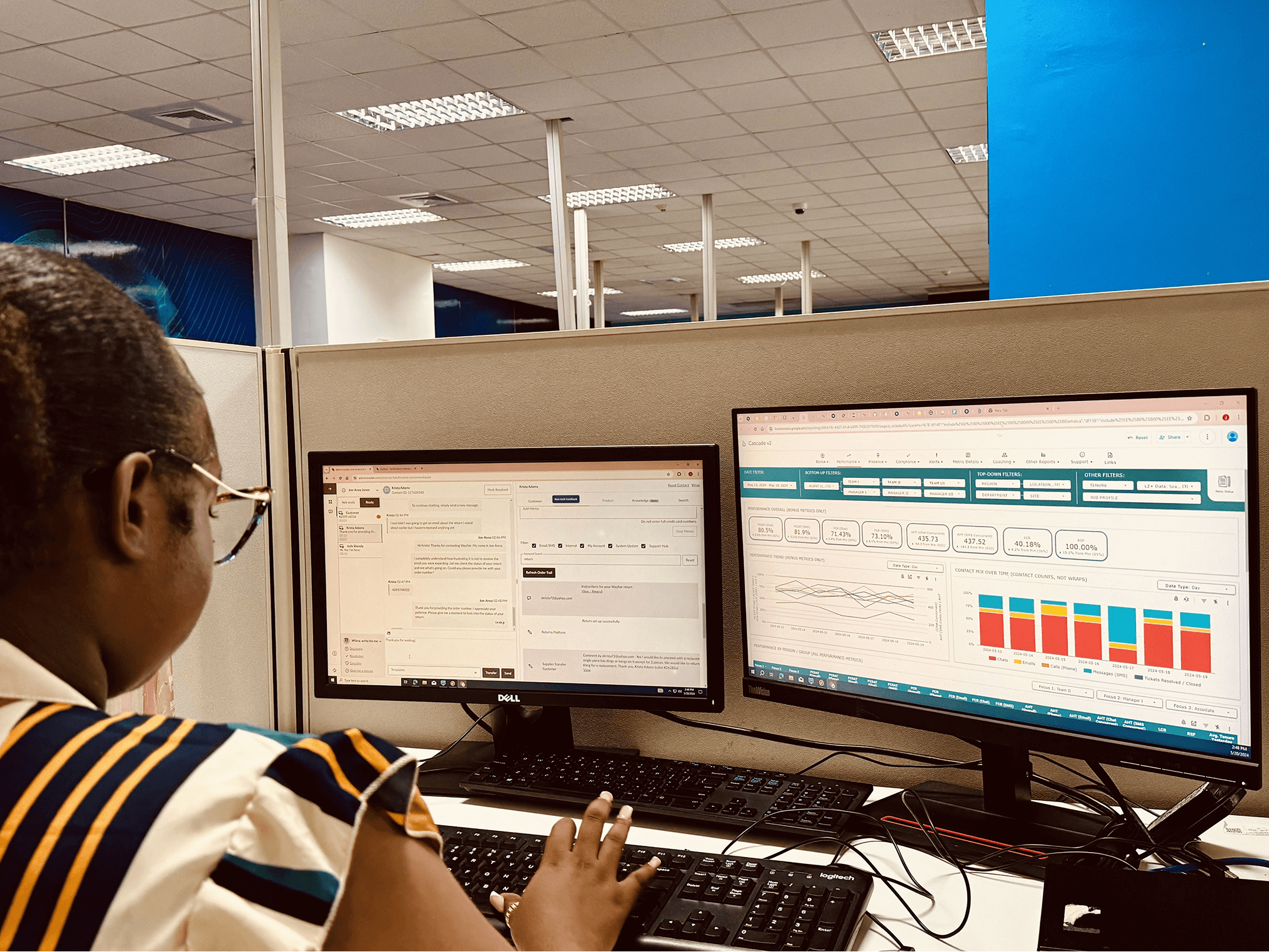
Conducted contextual inquiries, fly-on-the-wall observation sessions and agent journey mapping sessions across multiple geographies and service centers -Kingston, Jamaica for US/CA and Galway, Ireland for EU/UK- to identify top friction points.
Analyzed quantitative performance data (e.g., CPH distribution by agent tenure, error rates in handling complex cases).
Synthesized findings into 3 key opportunity areas:
Automating routine interactions and surfacing relevant data.
Reducing training[ friction with in-line guidance and self-paced up-skilling.
Building an integrated agent portal to replace fragmented tooling.
Led stakeholder alignment sessions with CS Ops, Tech, and Finance to prioritize initiatives against labor cost reduction targets.

"
Our research revealed that agents didn’t need more tools, they needed one intelligent system that worked with them, not against them.
Design Strategy & Approach
Vision
Create an AI-augmented service agent portal that blends automation with human reassurance.
Design Principles
Automation-first, humans are always available.
Progressive learning: Training delivered in-context, not front-loaded.
Game-like motivation: Gamification tied to performance, growth, and rewards.
Leadership Role
Led, coached and mentored a global team of product designers on how to facilitate, collect and translate qualitative research data into scalable systems.
Partnered with Ops leaders to ensure design solutions aligned with hiring, training, and performance models.
Execution & Collaboration
Cross-functional Work
Collaborated with product managers, engineering leads and call enter managers to scope proposed features like AI-powered digital assistants, contextual guidance, and auto-training modules.
Influence
Presented vision decks to senior leadership, framing ROI in terms of CPH gains and labor cost savings.
Key Design Deliverables
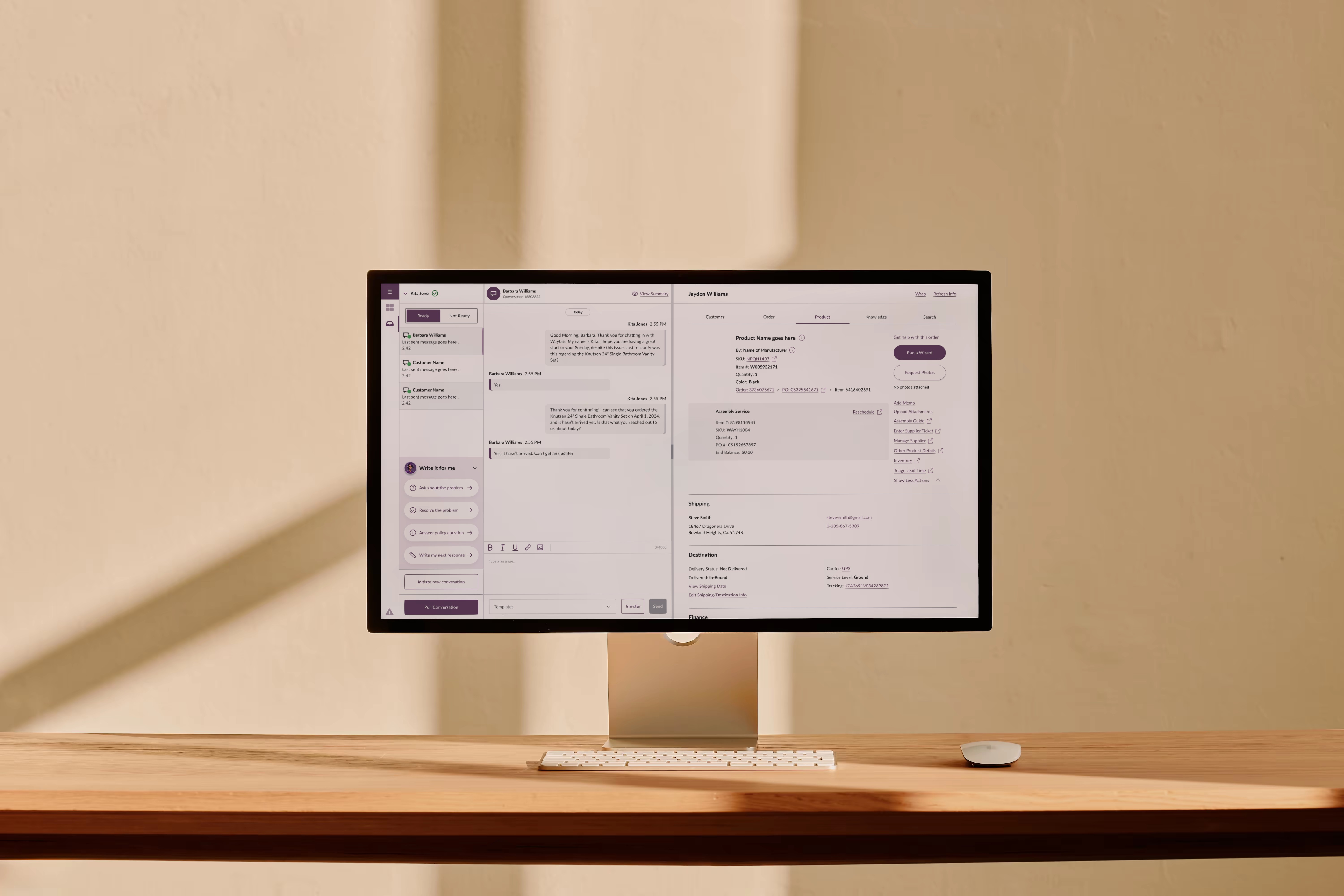
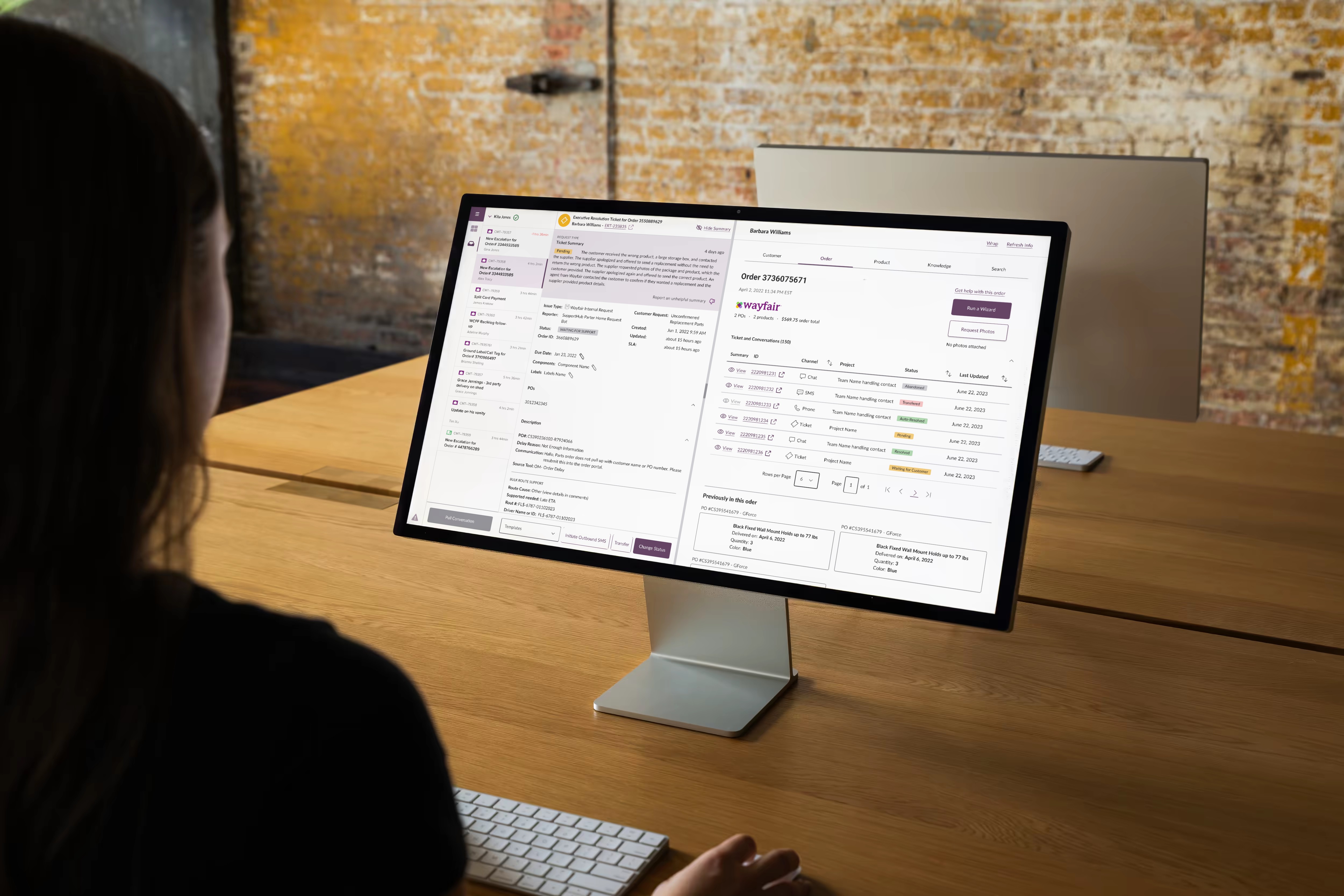
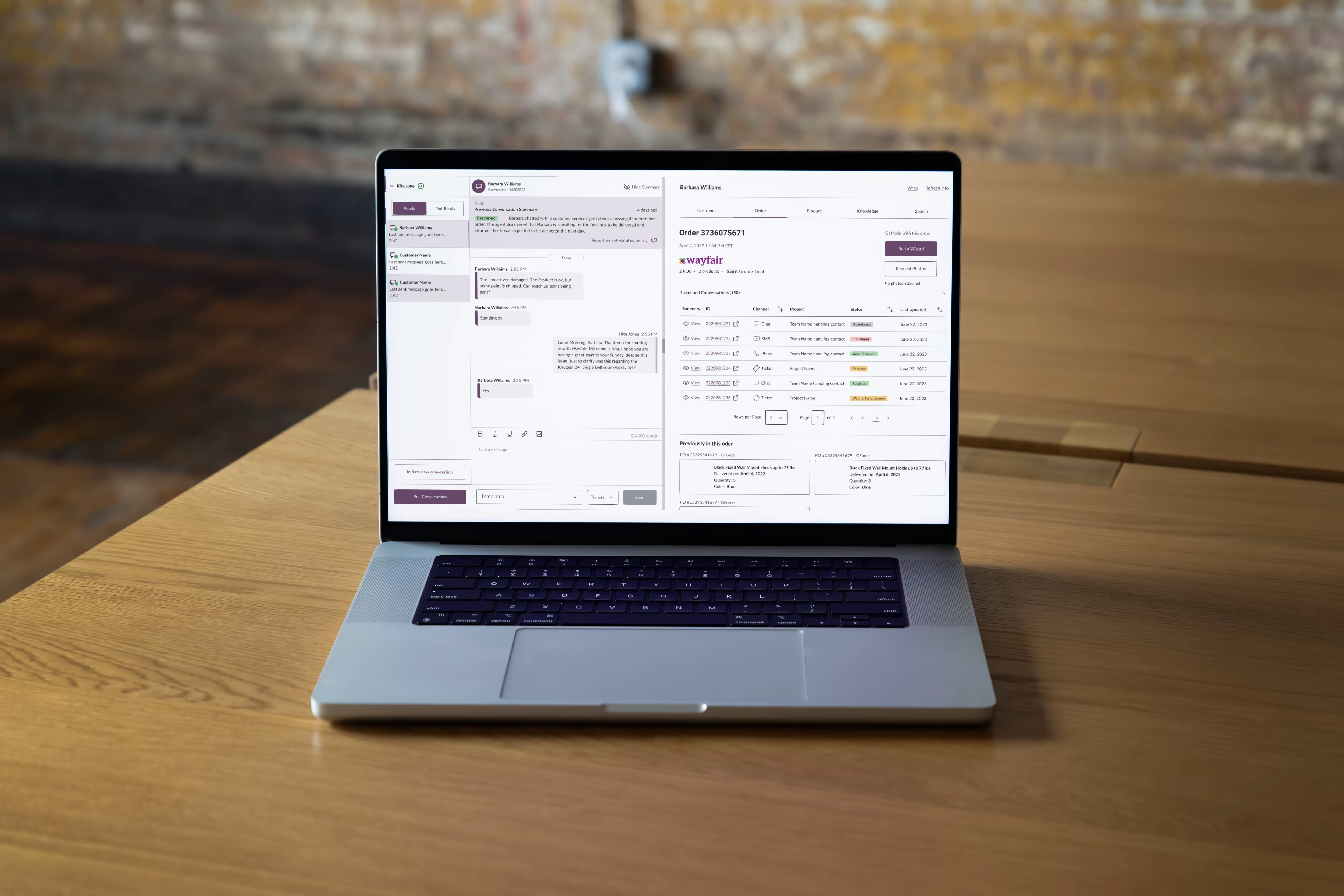
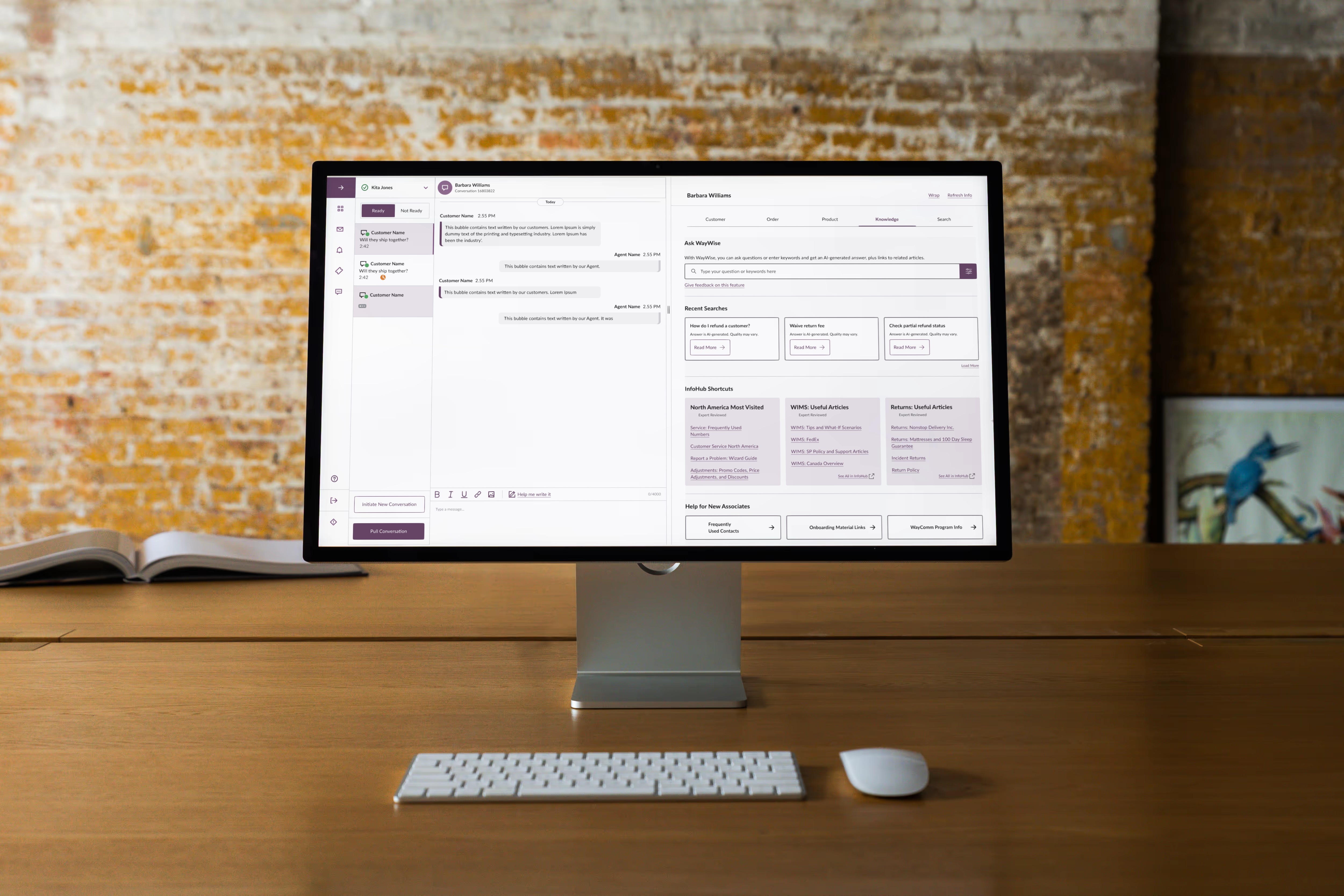
Unified Agent Portal: Centralized scheduling, tooling, training, and live contact handling.
AI Assistant - Wilma & WayWise Integration: Automated first-line triage and in-context prompts for agents.
Dynamic Training Modules: Delivered during downtime or after specific contact types.
Gamification Layer: Coins, badges, levels, and performance metrics linked to bonuses and recognition across service call center pods.
Outcome & Impact
Contacts Per Hour (CPH)
Early pilots showed an increase from 4.5 → 7.2 CPH (+60%), with target path to 9+.
Onboarding Time
Reduced agent ramp-up from 5 days to <1 day in test cohorts.
Containment
New AI-driven flows achieved 18% higher containment in targeted categories.
Agent Sentiment
CSAT for agent tools increased +25 points in internal surveys.
Business Impact
Achieved $24M+ annual cost savings in labor costs at scale, while improving first contact resolution (FCR) and customer net promoter score (NPS).