Consumer UX
Self-Service Design
Team Leadership
Data-Driven Design
Post-Purchase Experience
Cross-Functional Collaboration
Enterprise UX
Context & Overview
Project Summary
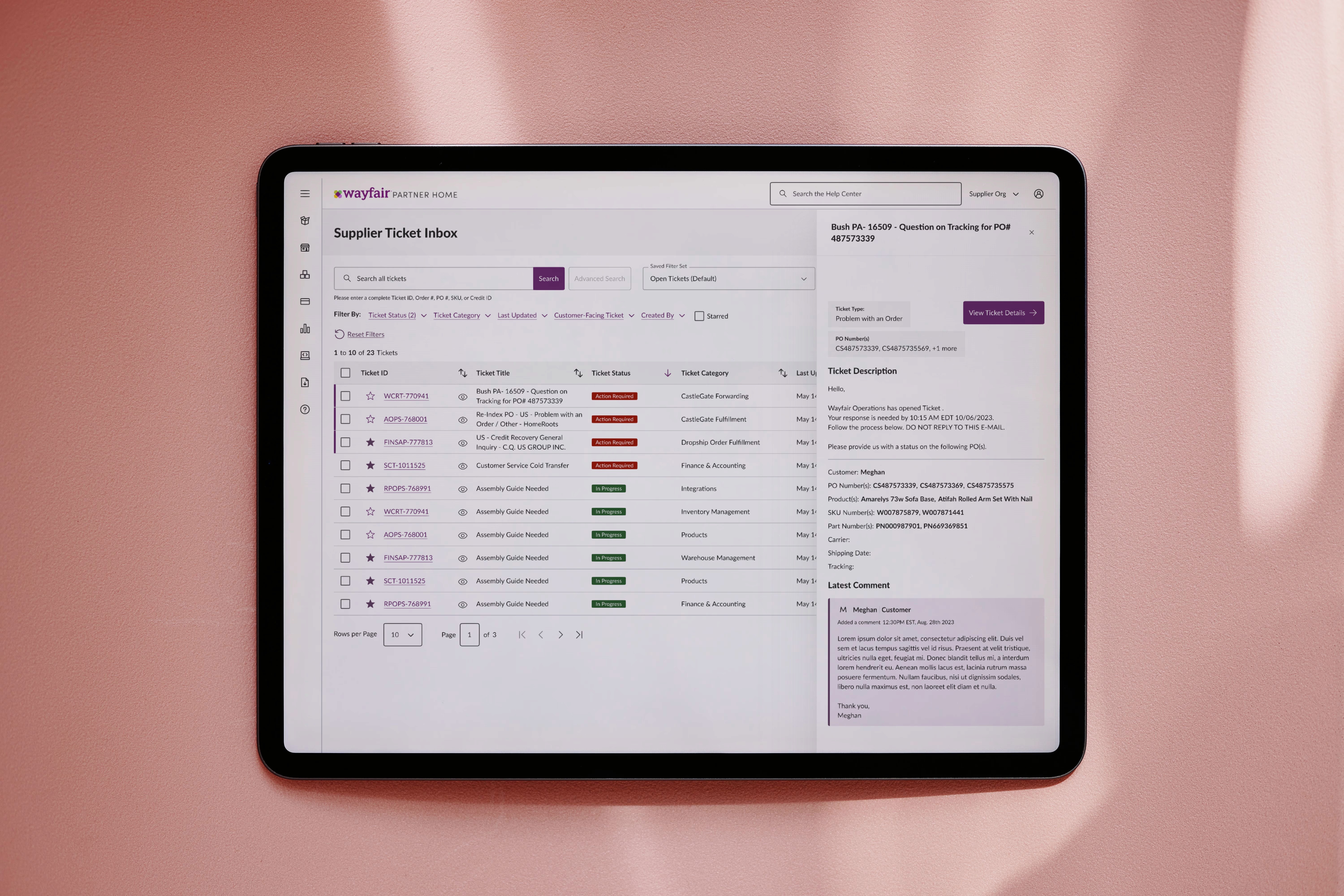
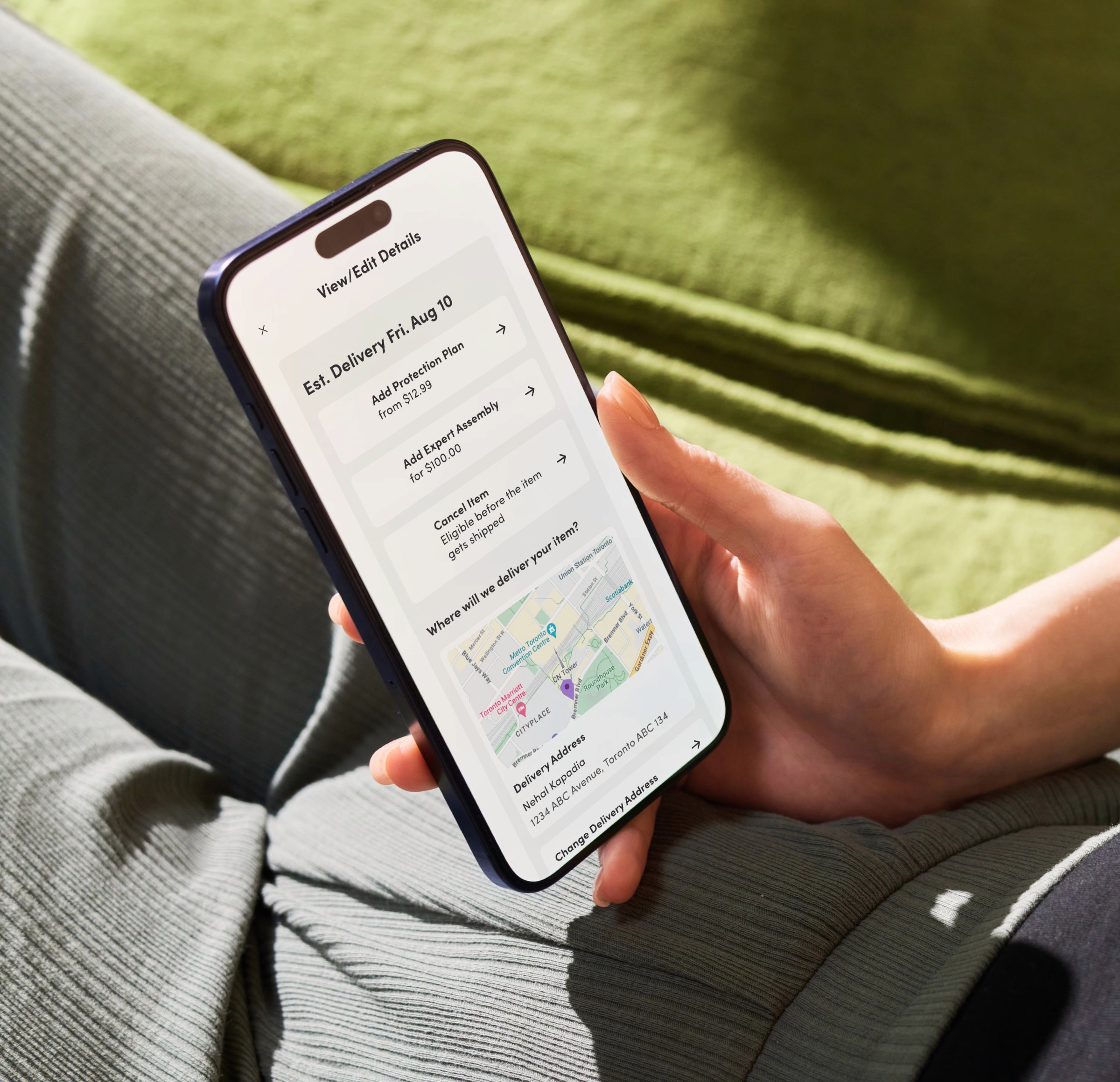
Wayfair’s My Orders page is the company’s highest-trafficked post-purchase service page with over 282M visits annually. It functions as the entry point for customers to track, manage, and resolve issues with their orders. Despite its criticality, the existing design was cluttered, outdated, and failed to drive self-service adoption, resulting in significant customer frustration and unnecessary service contacts.
My Role
As Senior Product Design Lead, I spearheaded the design strategy and execution across multiple cycles. I led a team of 4 product designers and UX researchers, partnered with PMs , engineering leads, operations, and data science, and collaborated with senior leadership across Global Customer Service Experience and Digital Retail Tech. My role required aligning competing priorities, orchestrating cross-functional workshops, setting design principles, and ensuring the redesign delivered measurable impact across millions of customers.
Timeline & Scale
This was a multi-phase, multi-year initiative spanning Q4 2023 through Q1 2024. The work touched over 22M Wayfair customers globally, with direct financial implications for contact reduction, customer satisfaction, and incremental revenue opportunities.
Challenge & Problem Statement
Customer Pain-points
Nearly 50% of follow-on contacts from My Orders came from customers who already had a self-service option available, but couldn’t find or trust it.
Business Impact
These unnecessary contacts drove millions in service costs annually, while frustrating customers and eroding brand trust.
North Star Metrics
Increase self-service adoption, reduce unnecessary live contacts, improve first contact resolution (FCR), and ultimately improve customer satisfaction (CSAT).
Constraints
The legacy system was built on outdated architecture (pre-NextJS).
Design debt created inconsistencies across platforms (desktop, mWeb, iOS, Android).
Multiple stakeholders with competing goals (deflection, upsell, CX).
"
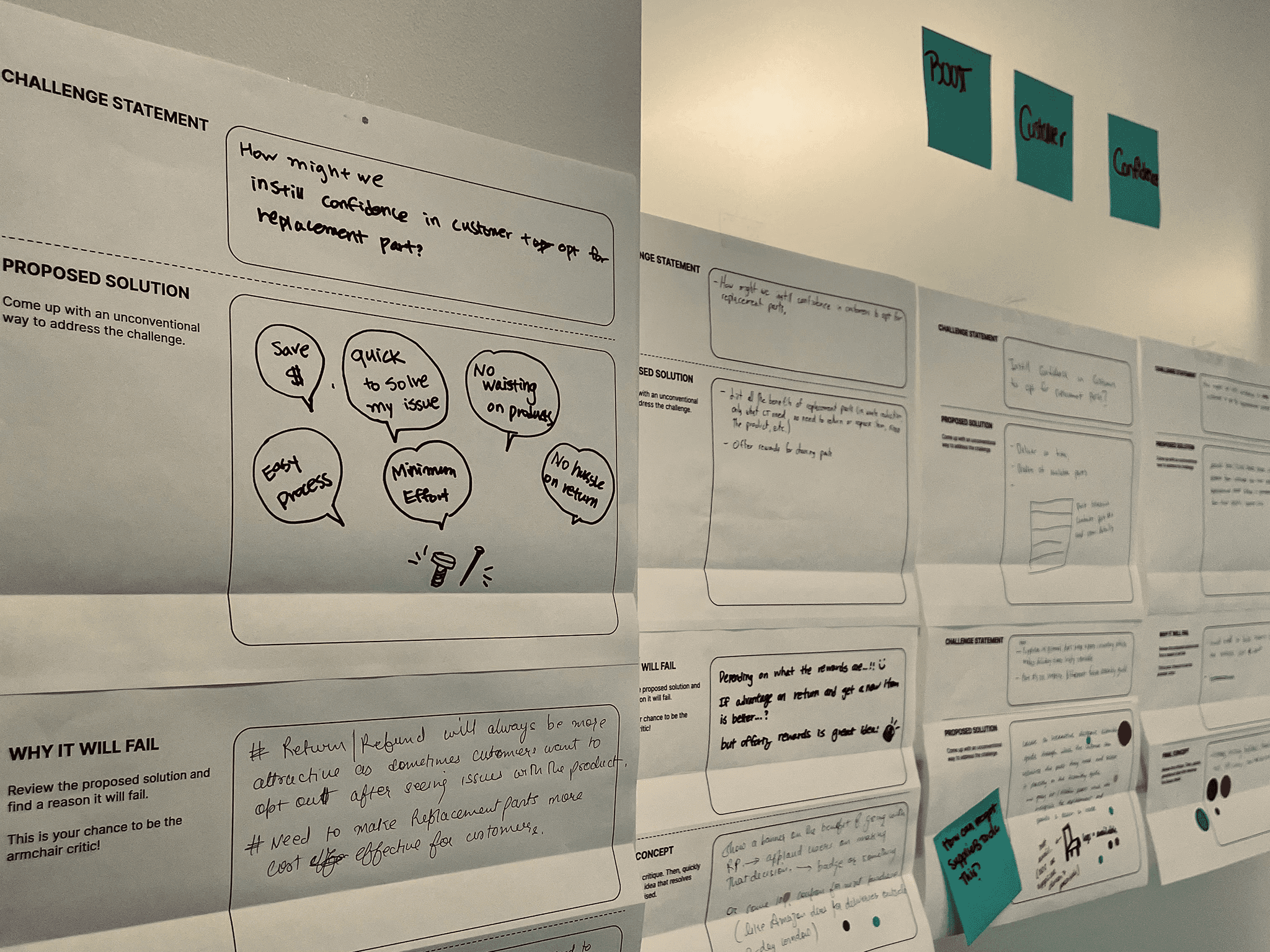
Redesigning My Orders wasn’t just a UI challenge, it was an organizational one. Success meant aligning service, product, and operations around a shared vision of effortless post-order customer experience at scale.
Discovery & Research
User Research
Ran evaluative studies, user testing, and journey mapping across 10,000+ customers. Identified that mobile customers, 70% of My Orders traffic, were significantly disengaged due to poor discoverability of self-service actions.
Behavioral Insights
Analytics revealed that 1M follow-on contacts annually originated from My Account and My Orders traffic. Over 40% of these customers were trying to resolve post-order issues but gave up before finding the right entry point.
Competitive Benchmarking
Reviewed online retailers such as Amazon and other global retail leaders to understand best practices in post order management UX.
Workshops
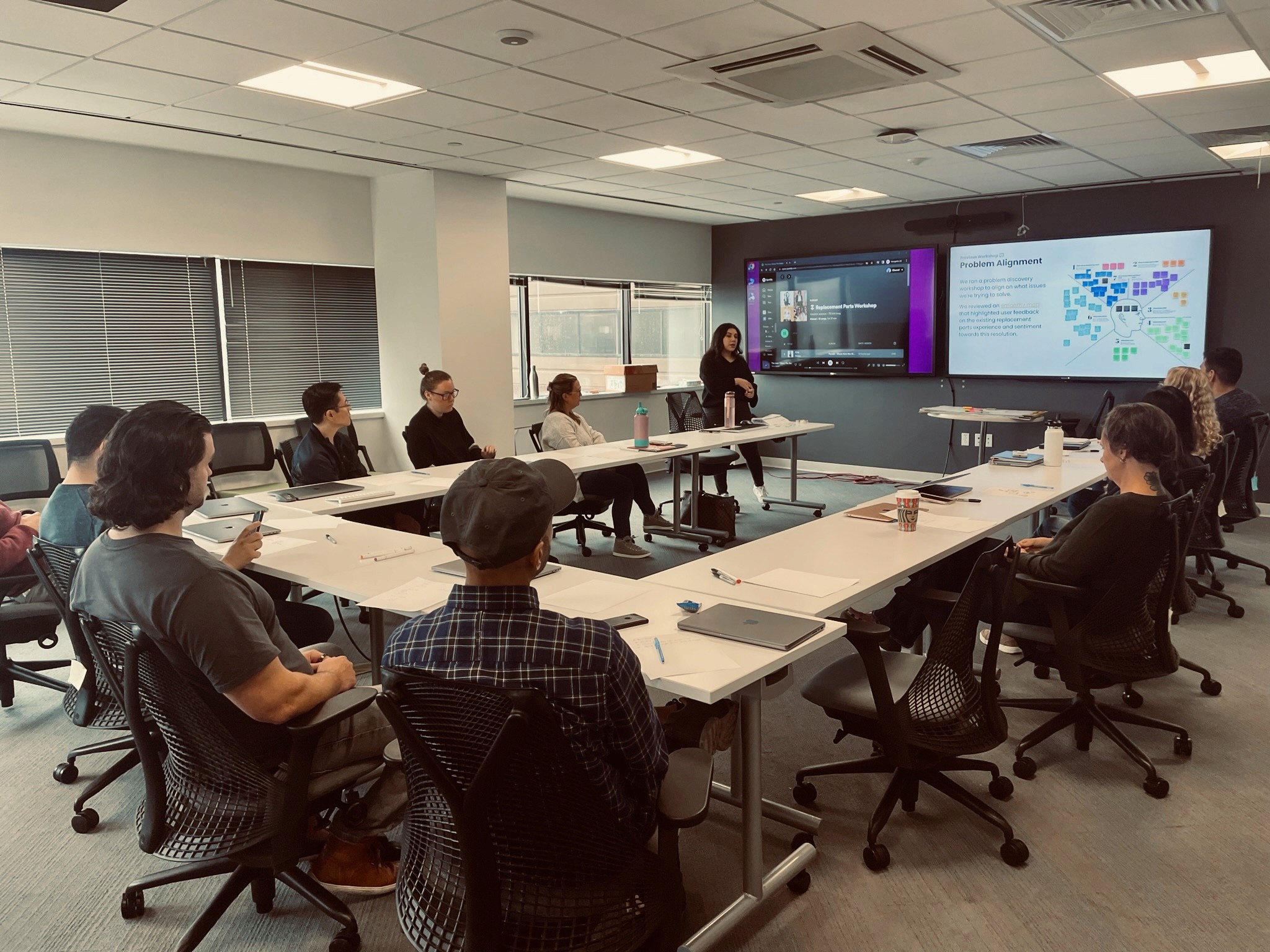
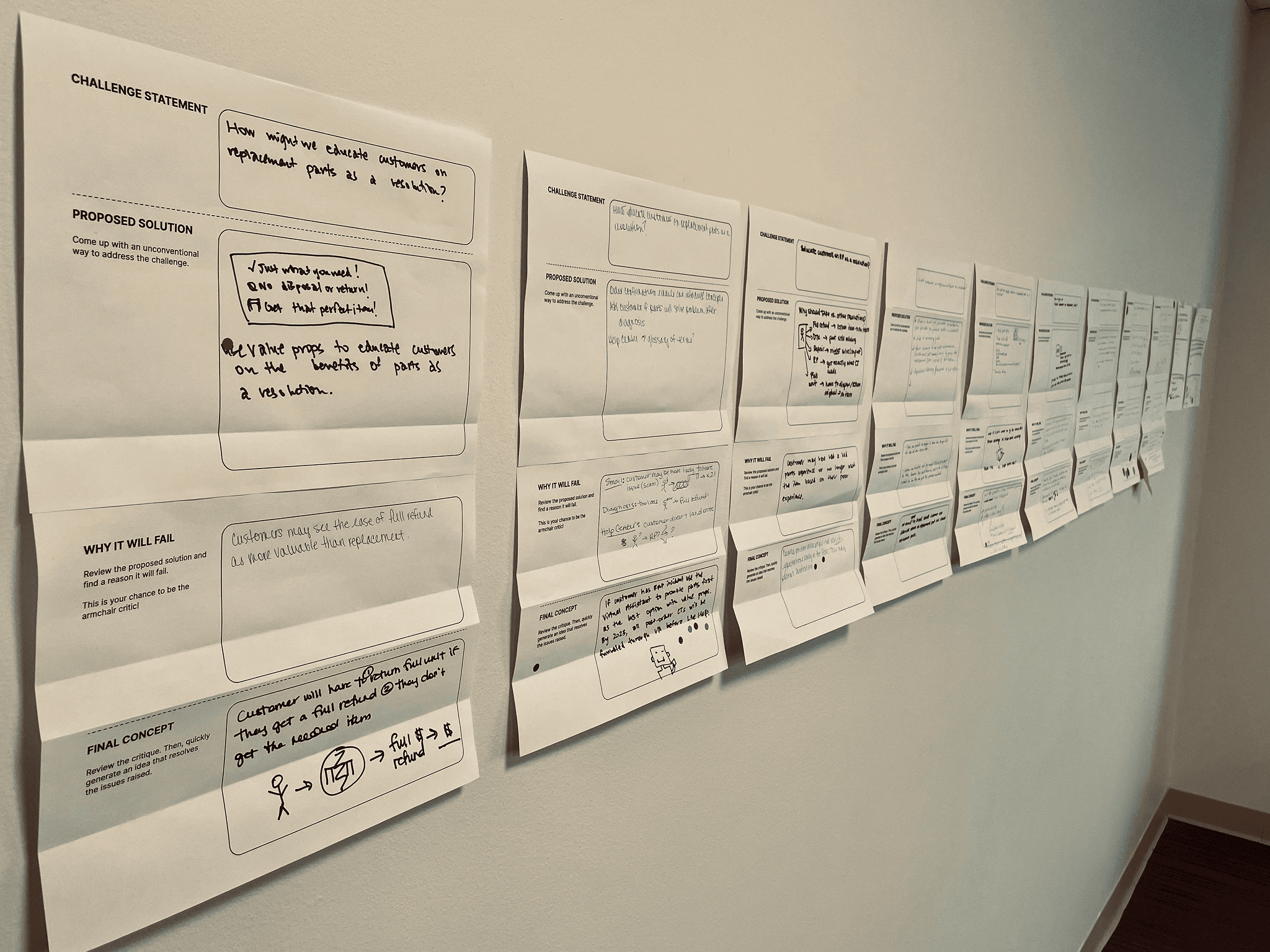
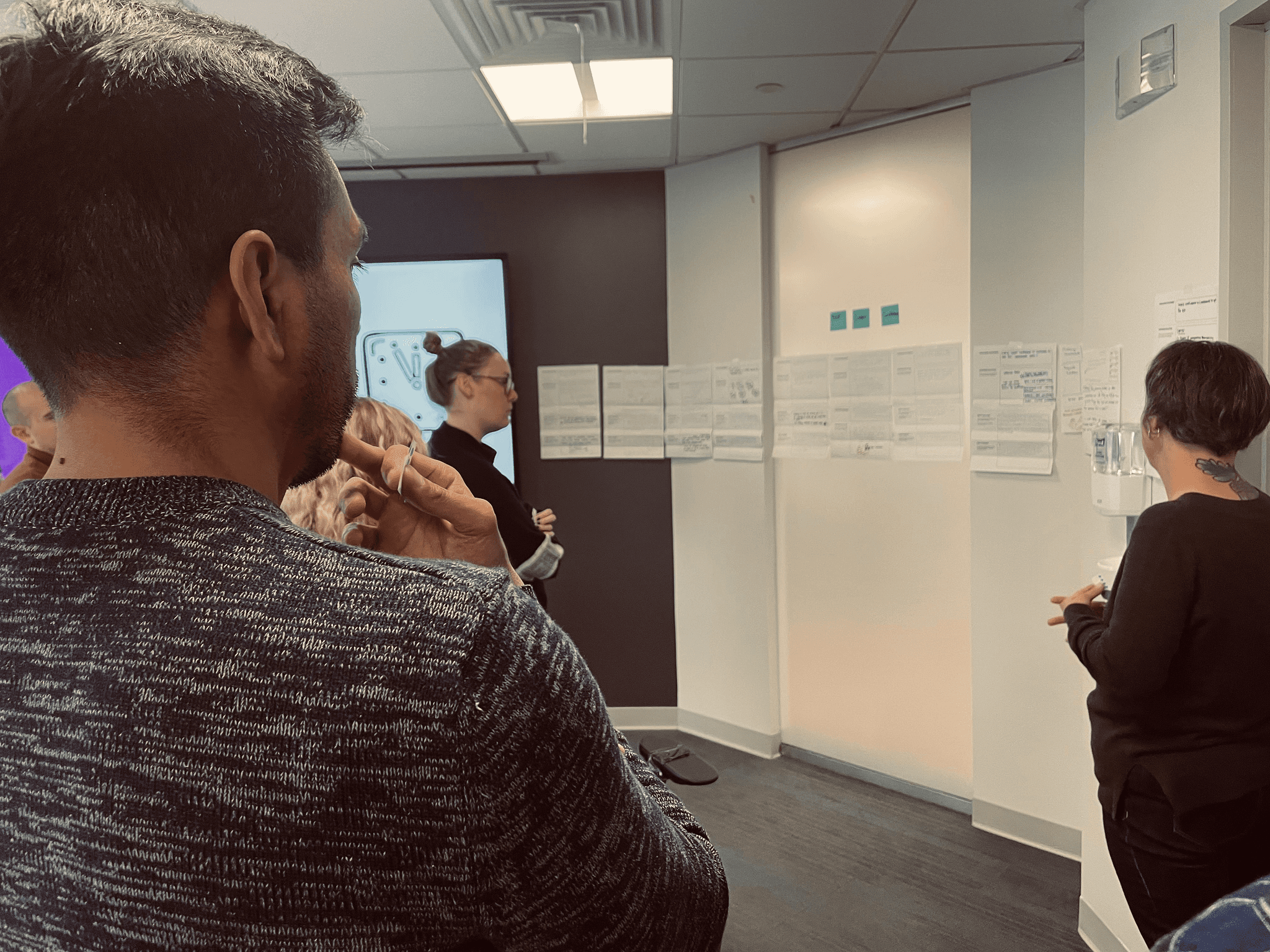
Facilitated discovery workshops with Order Experience and Service stakeholders, aligning on “How Might We” problem statements and prioritizing redesign opportunities.
"
Our research insights made it clear: if customers couldn’t find self-service on mobile, no amount of backend efficiency would reduce frustration. Designing for discoverability became our north star.
Design Strategy & Approach
Vision
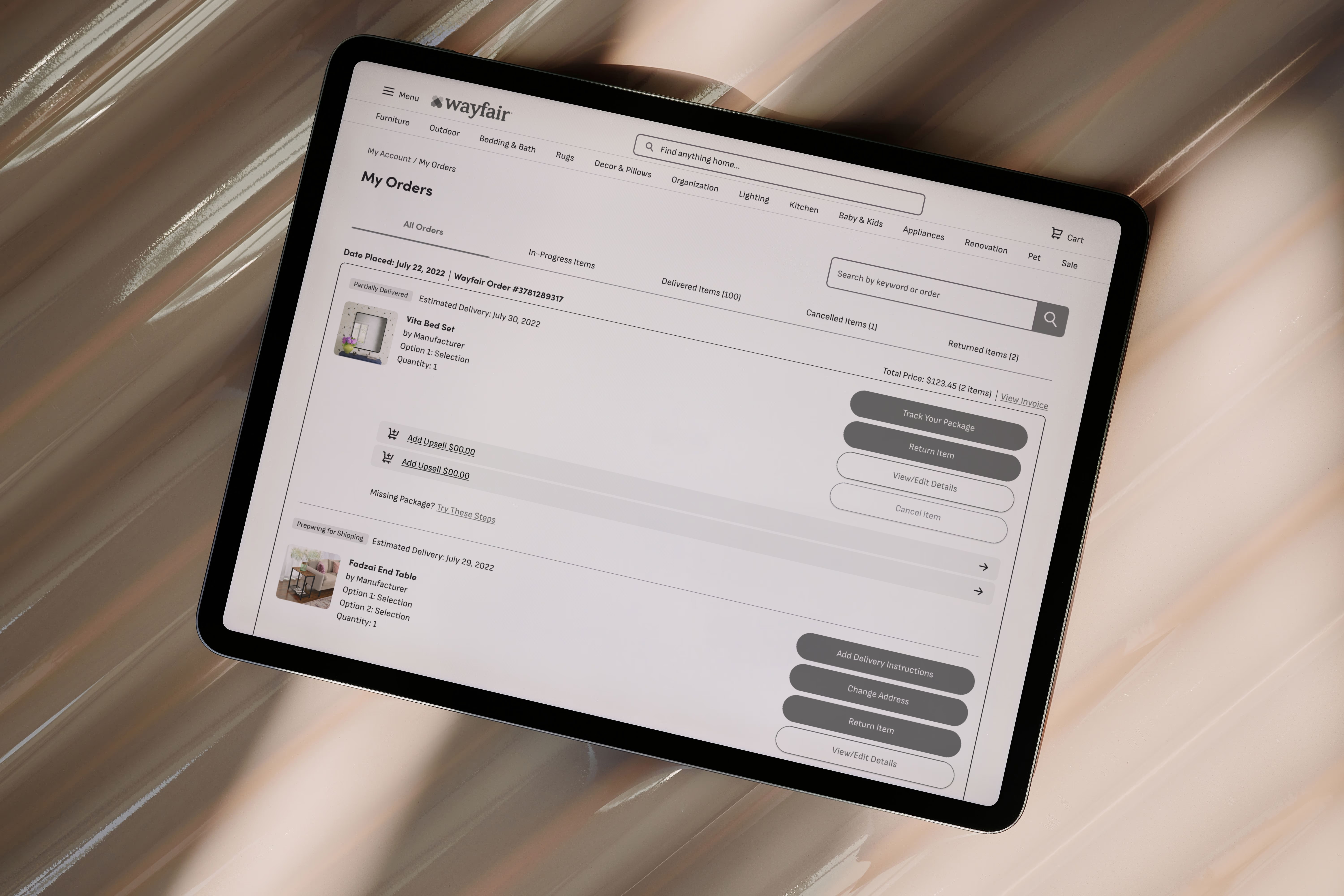
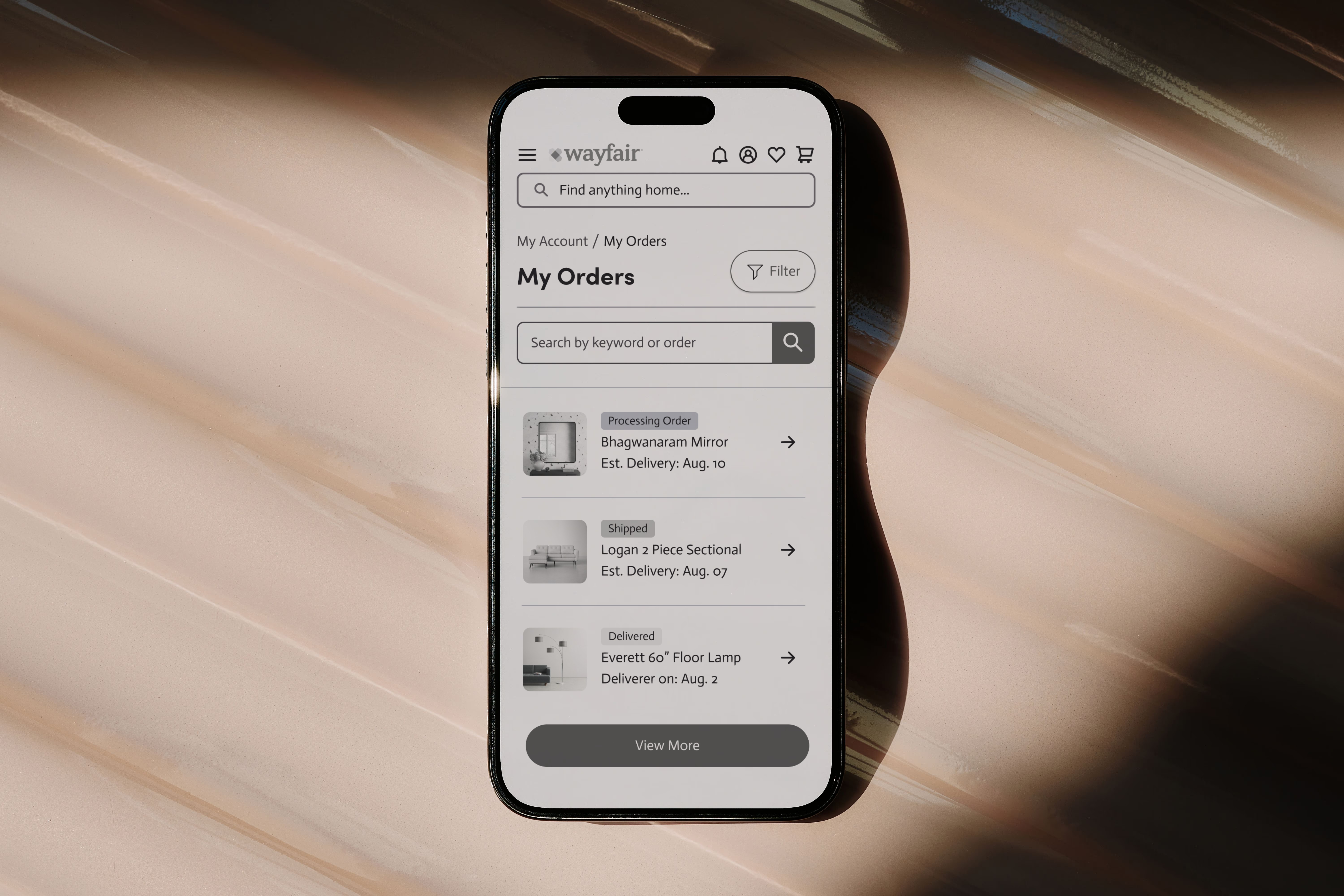
Transform My Orders into a mobile-first, scalable self-service hub that simplified navigation, reduced cognitive load, and empowered customers to resolve issues without live contact.
Design Principles
Simplicity first: Lead with key order progress and essential CTAs.
Progressive disclosure: Surface more details and actions as customers drill deeper, reducing clutter.
Mobile-first scalability: Design for small screens first, then extend outward to desktop.
Systems Thinking
Built a flexible information architecture that could accommodate future enhancements like upsell opportunities, consolidated deliveries, and comms opt-ins.
Team Enablement
Established design reviews, prototyping standards, and introduced a page-level feedback mechanism to create a continuous feedback loop.
Execution & Collaboration
Partnerships
Partnered with 6 PMs and 4 engineering teams across Service, Storefront, and Supply Chain orgs to align on roadmap and sequencing.
Leadership Influence
Influenced senior leadership by framing the opportunity in revenue and cost savings terms ($420K in initial savings from Virtual Assistant FOCR reduction, +$750K savings from Unified Help & Contact Portal).
Roadmap Approach & Rituals
Introduced phased roadmap approach:
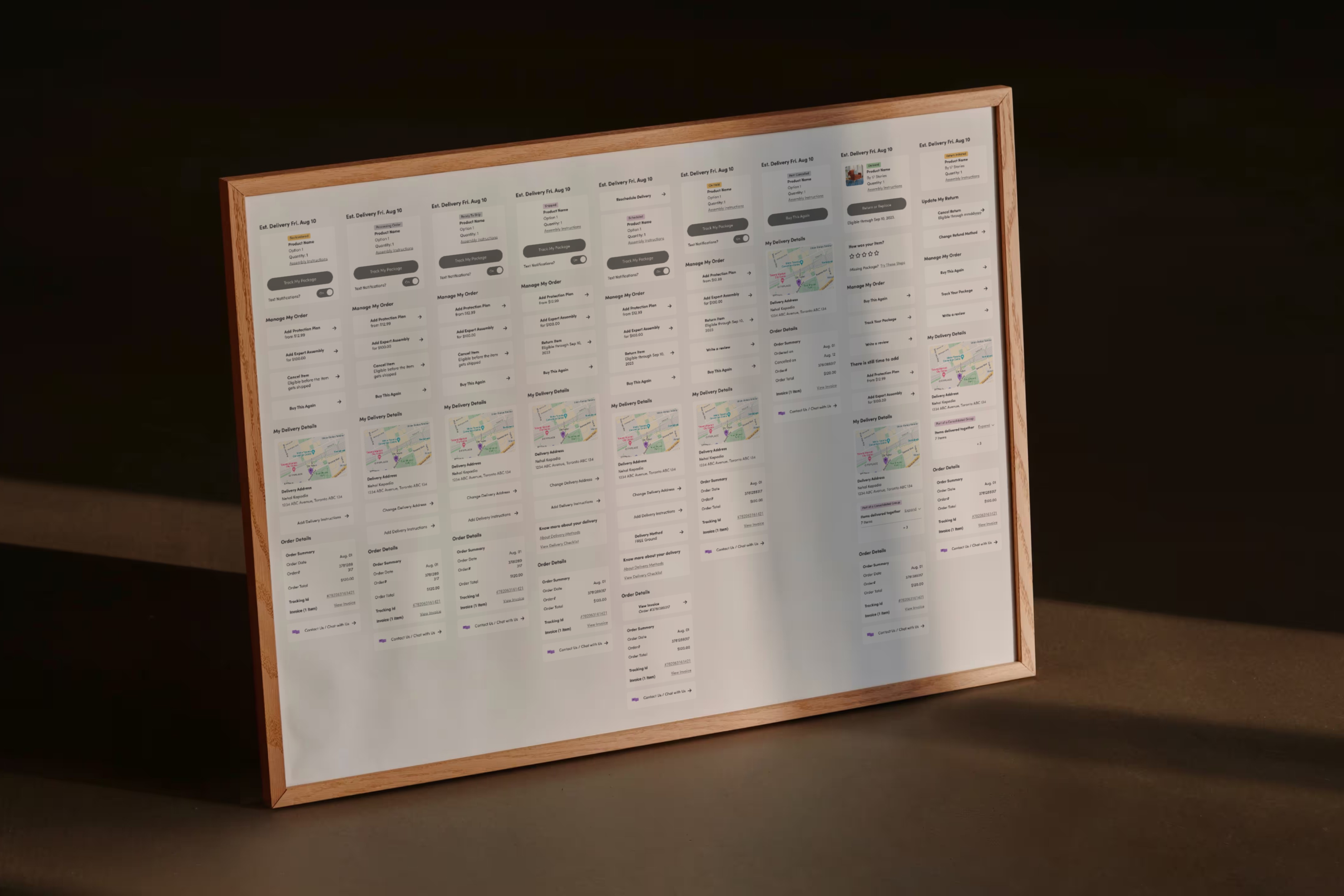
Phase 1 (Q4 ‘23): Fix the basics, streamline product card, item-level focus, add feedback loop.
Phase 2 (Q1 ‘24): Major design shift, consolidate CTAs into View Details, simplify hierarchy, introduce visual design updates.
Phase 3 (Q2 ‘24): Unlock new capabilities, comms opt-ins, delivery grouping, upsell/rebuy, recommendation carousels.
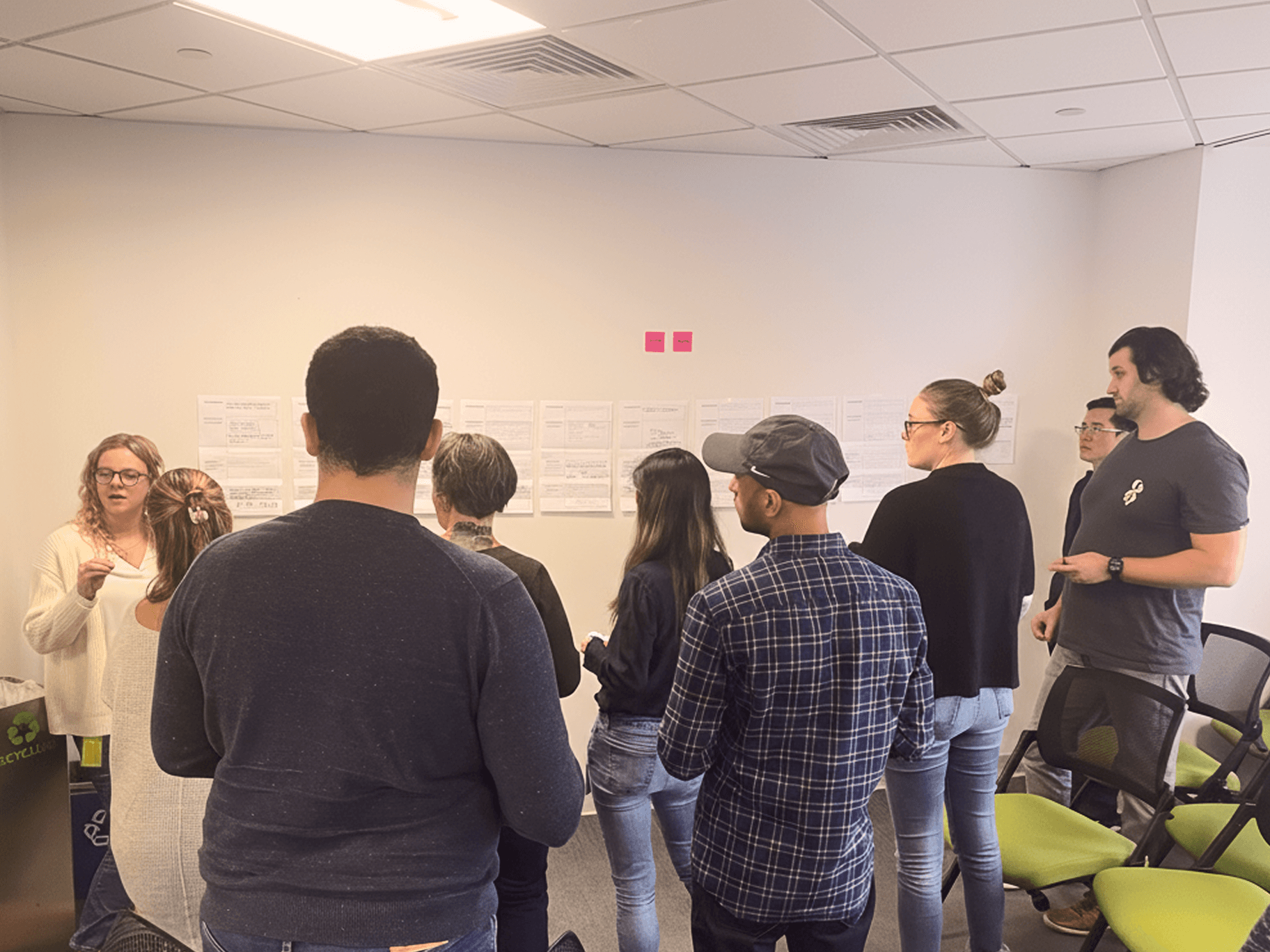
Facilitated cross-departmental rituals: Weekly design review forums, joint PM/Eng design critique sessions, and post-test readouts.
Outcome & Impact
Self-Service Adoption
Increased adoption on My Orders by 19% on mobile and 12% on desktop, deflecting over 580K contacts annually.
Cost Savings
Achieved an estimated $3.4M in annual service cost reduction through deflection and improved FCR.
Customer Satisfaction
Reduced navigation errors by 38%, improved task completion speed by 27%, and drove a measurable uptick in CSAT (customer-reported ease of resolving issues rose from 71% → 84%).
Revenue Impact
Early upsell pilots (post-return carousels, “Buy Again” features) contributed an incremental $2.1M in annualized revenue by EO of Q3 2024.
Scalability
Created reusable UI components aligned with Homebase (Wayfair’s Design System), enabling consistent rollouts across other post-order surfaces.